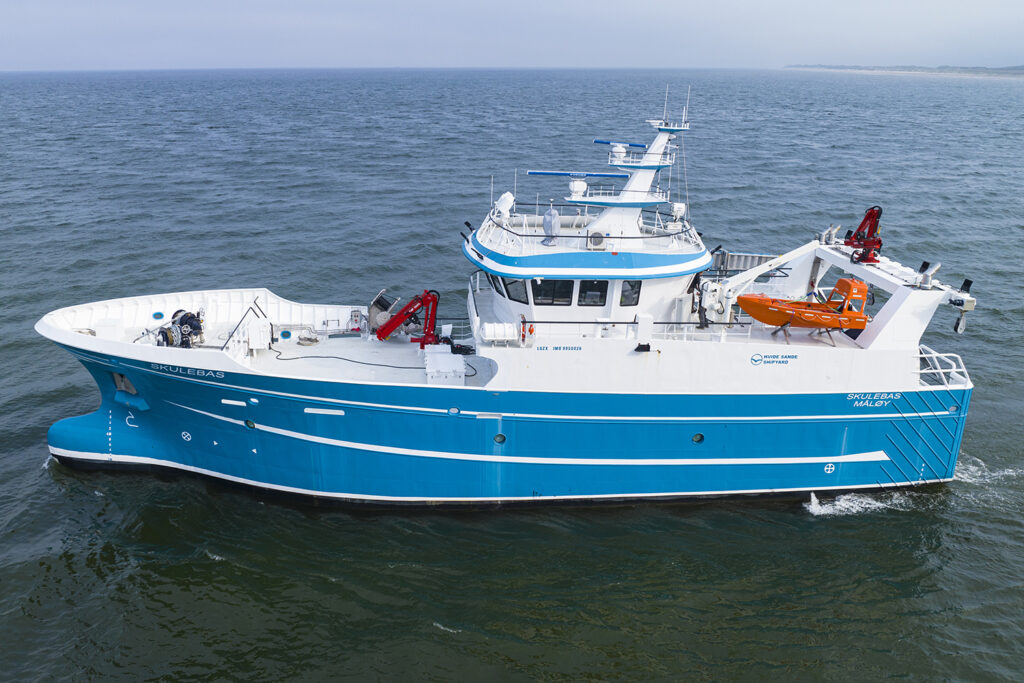
The NB 160 is a customised 40.9 metre-long fishing vessel to be built for lobster fishing in Canadian waters. The vessel is optimised for the use of lobster pots, which are handled through a moonpool that enables a safe and stable working process protected from wind and weather. This contributes to an improved working environment and increases safety for the crew.
The vessel is designed for a crew of up to 19 people. The hull is expected to arrive in Hvide Sande in mid-2026, where outfitting of the vessel will begin. Final delivery is scheduled for 2027.
Specifications
Vessel type
Fishing vessel
Delivery
Second quarter of 2027
Description
Lobster harvester with full ammonia RSW system and moonpool hauling system
Hvide Sande Shipyard has successfully launched another newbuild. Our newbuilding no. 159, named Ellenor, is a modern, electric/hybrid passenger ferry built for Tjörns Hamnar AB. This ferry represents our tenth project incorporating advanced electric and hybrid propulsion systems, developed in close collaboration with FKAB Marine Design for Tjörns Hamnar AB in Sweden.
The hull is constructed in Poland, while all outfitting, installation, and final commissioning were carried out at Hvide Sande Shipyard.
Specifications
Vessel type
Electric hybrid Ferry
Delivery
2026
Description
Hybrid – Passenger Vessel
Hull material
Aluminum
Tonnage
150 GT
Length over all
27 m.
Breadth beam
7,2 m.
Depth
1,85 m.
Accomodation
180 total passengers
Main engines
2 pcs. Danfoss Em-PMI540-T1500
Aux. Engine
2 pcs. John Deere Type 6068AFM85. 129 Kw @ 1500 rpm + LFP battery system – 1027 kWh
Speed (knots)
11 knots
Classification
Bureau Veritas
Increased capacity and improved functionality
Ellenor replaces the existing ferry Hakefjord, originally delivered by the Hvide Sande Shipyard in 1998. Compared to its predecessor, the new vessel delivers a significant upgrade in both capacity and operational functionality.
With a length of 27 meters and accommodation for up to 180 passengers, capacity has increased by approximately 50%, ensuring improved efficiency and service capability.
Electric/hybrid propulsion system
Ellenor is equipped with a modern electric/hybrid propulsion system. Two Danfoss Editron electric motors, each rated at 250 kW, drive the ferry’s propellers.
The primary power source is a battery system with a capacity exceeding 1000 kWh, enabling a service speed of 9 knots with zero emission operation.
To ensure extended range and operational reliability, the vessel is additionally fitted with a 117 kW John Deere diesel engine, functioning as a range extender.
A five star recommendation
“Our collaboration with Hvide Sande Shipyard has been a positive experience, characterized by a pleasant approach and a good understanding of our needs.
We would give the shipyard a 5-star recommendation. If we in the further have newbuild projects, we will contact Hvide Sande Shipyard”
– Patrik Ulmfelt, manager at Tjörns hamnar ab
Interior fittings of the ferry
The passenger areas are designed with a clear focus on comfort, durability, and quality. The lounge is equipped with 75 passenger seats from Georg Eknes, continuing a trusted supplier relationship established with Hakefjord.
Safety is addressed through comprehensive lifesaving equipment supplied by Viking, including liferafts and portable fire and rescue systems, all compliant with current maritime standards.
ES-TRIN standards
Ellenor is the first passenger ferry in Sweden constructed in accordance with ES-TRIN standards, reflecting a high level of safety, accessibility, and technical performance.
The vessel is also designed to meet modern operational requirements, including the capacity to accommodate a larger, modern ambulance. When not in use for emergency transport, this space provides flexibility for bicycle transport.
The NB 158 is a fully electric ferry vessel expected to be completed in the first quarter of 2026. The ferry to be delivered to the Norwegian shipping company, Torghatten, will have capacity for 30 cars and 149 passengers. It will be deployed in the Tromsø area, north of the Arctic Circle, where it will provide emission-free transport in vulnerable Arctic waters.
The NB 158 is the ninth newbuilding at Hvide Sande Shipyard delivered with either hybrid or fully electric solutions. The hull is expected to be delivered to Hvide Sande in the summer of 2025, where further construction can begin in earnest.
Specifications
Vessel type
Electric Ferry
Vessel name
Helgøy
Delivery
2026
Description
Double ended ferry 50m
Hull material
Steel & aluminum
Length over all
49,90 m.
Breadth beam
13,90 m.
Depth
4,00 m.
Accomodation
30 cars and 149 passengers incl. crew
Main engines
2 x Permanent magnet electric motor – 750 kW
Aux. Engine
2 x genset Scania DI16 091M – 480 kW engines with Seam PM generator
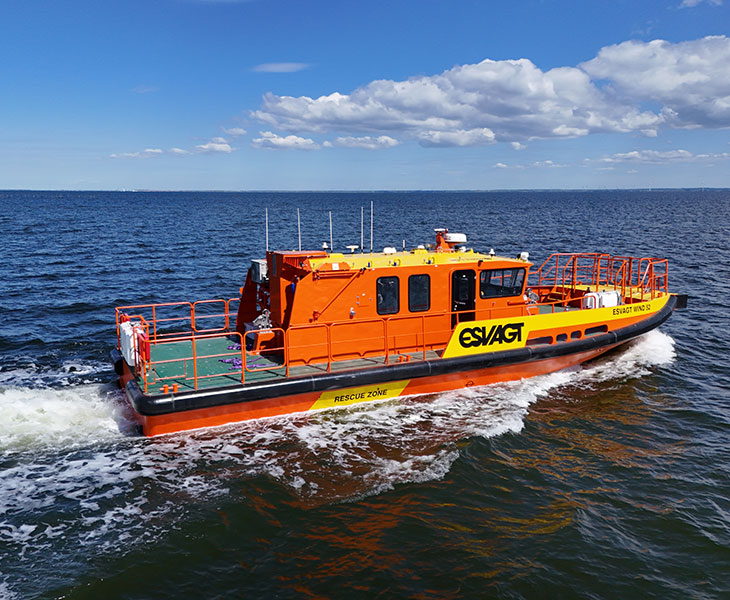
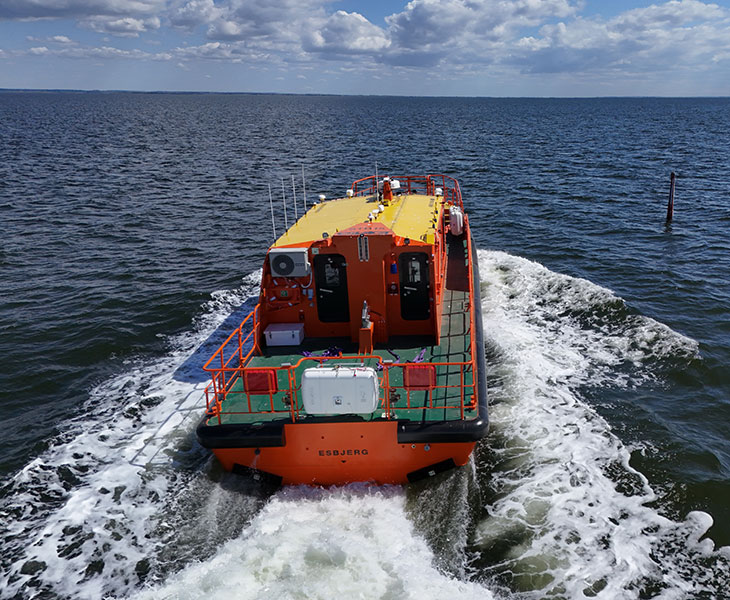
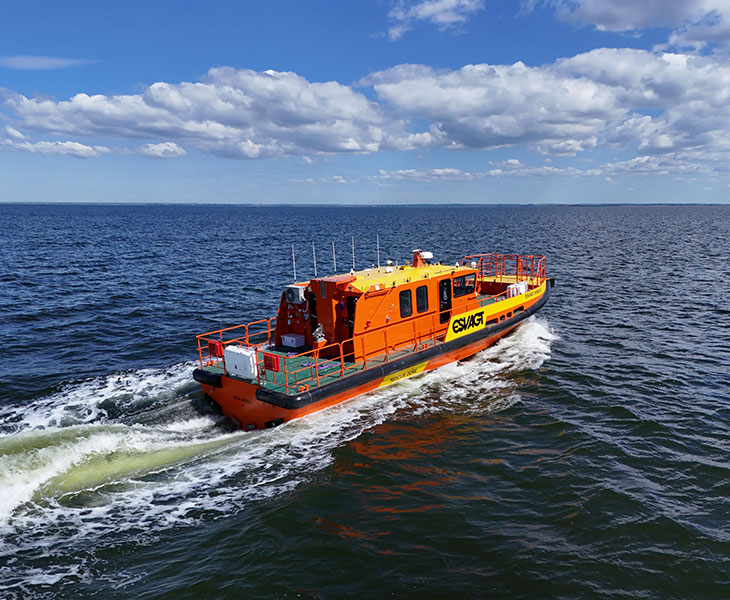
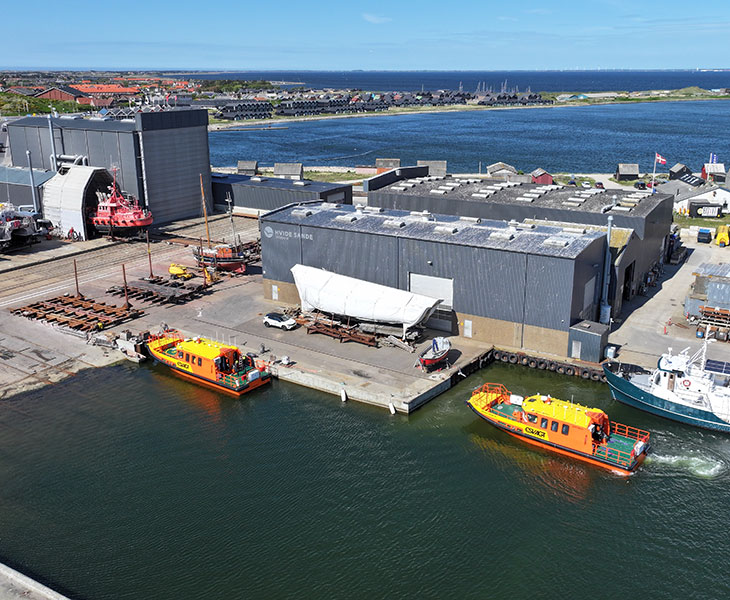
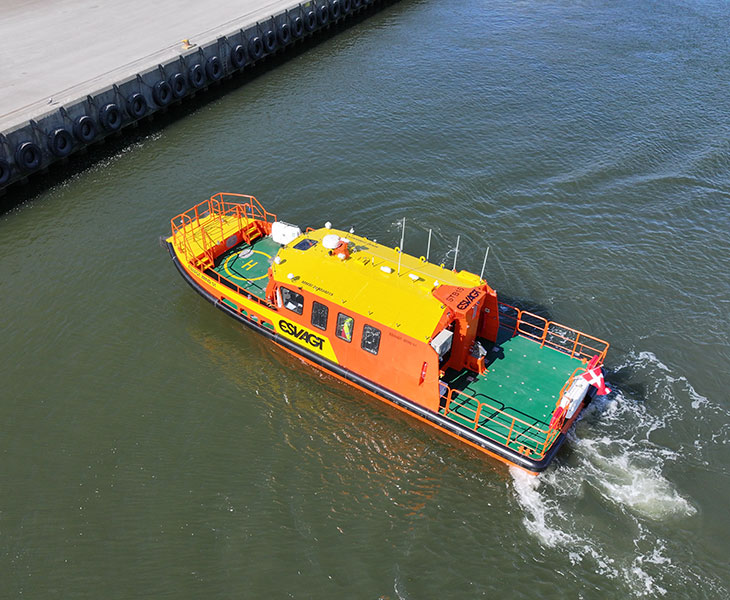
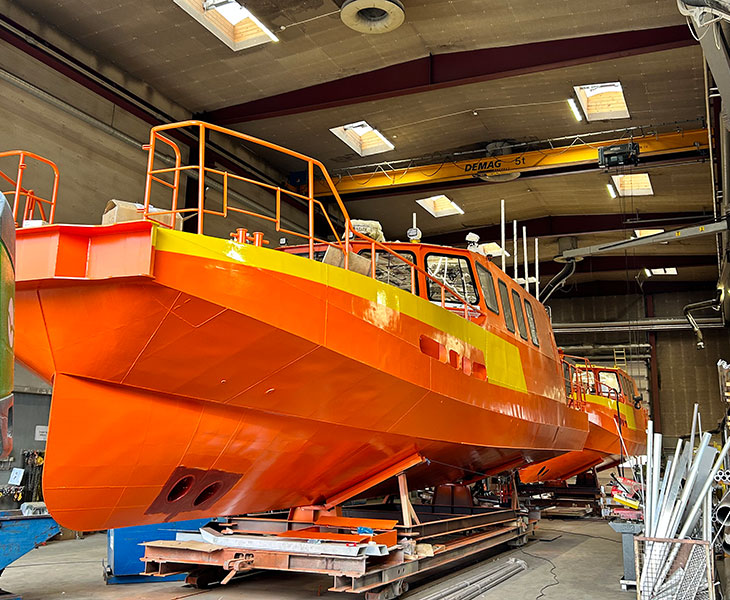
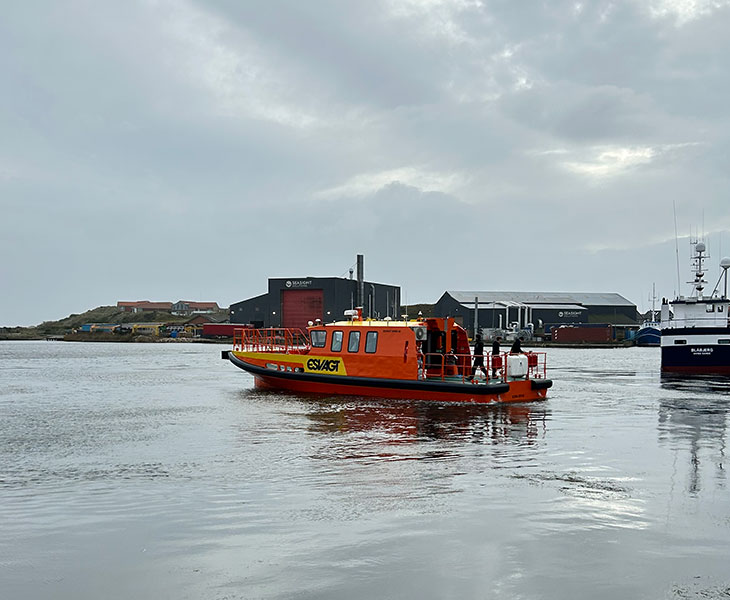
In May 2025, Hvide Sande Shipyard delivered the third boat in the STB15 series, the ESVAGT WIND 52. Built of aluminum, the 17,2-meter-long boat is powered by two Volta Penta D8 IPS 600 engines, enabling speeds of up to 25 knots and a certified range of 200 nautical miles.
The ESVAGT WIND 52 is one of three STB15 boats designed to bolster ESVAGT’s offshore wind service operations. Designed to meet ESVAGT’s high standards for safety, flexibility, and operational efficiency, these boats reliably transport personnel and cargo in challenging offshore conditions.
Specifications
Vessel type
Crew transfer Vessel
Vessel name
ESVAGT WIND 52
Delivery
First quarter 2025
Description
The STB (Safe transfer boat) will be launched from a larger mothership
ESVAGT identified the need for a resilient and versatile daughter craft capable of safely and efficiently transferring personnel in varying sea conditions. The STB15 boats are designed specifically to serve offshore wind farms, either operating from a mothership or directly from port, ensuring uninterrupted service in all operational scenarios.
A key aspect of the project was delivering three Crew Transfer Vessels (CTVs) that are built with proven reliability and adaptability to meet a wide range of offshore requirements. Hvide Sande Shipyard’s extensive experience in precision aluminum shipbuilding made us a natural partner for the task.
High demands with technical precision
The ESVAGT WIND 52 is engineered to meet the rigorous demands of offshore wind support operations. Designed for daily operations, the boat can launch from a mothership or directly from the port, making it a resilient and adaptable addition to ESVAGT’s fleet. One of three STB15 boats built at Hvide Sande Shipyard, the ESVAGT WIND 52 measures 17,2 meters in length and has a durable aluminum hull designed for offshore performance.
Each boat in the series is powered by two Volta Penta D8 IPS 600 engines capable of reaching speeds up to 25 knots and certified for a range of 200 nautical miles. With the capacity to transport up to fifteen technicians and two ton of cargo, the ESVAGT WIND 52 provides a reliable, high-performance service where it matters most.
A strong collaboration
“When we started the STB12 project in 2014, 3D drawing technology was still developing, so we built a full-scale mockup. For vessels 5–8, we chose Hvide Sande Shipyard to support the Danish industry. CEO at Seasight Group Carl Erik Kristensen visited us early on and quickly confirmed their ability to deliver at the right price. The cooperation has been excellent. Our goal was to be equal partners before and after delivery, and we achieved that. Hvide Sande Shipyard delivers high-quality work with strong documentation and process control. Challenges were solved constructively, and agreements were upheld, even without much discussion”
Søren Westphal, Senior Project Manager at ESVAGT
About the ESVAGT WIND project
ESVAGT is a leader in safety and service at sea, especially in the offshore wind sector. Built in close collaboration with ESVAGT, the STB15 series meets the demands of modern offshore operations, where safety, speed, and dependability are essential.
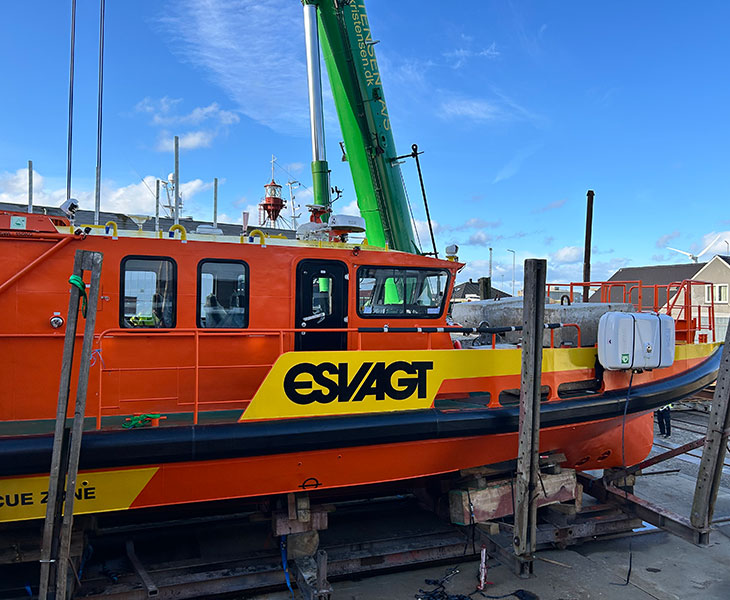
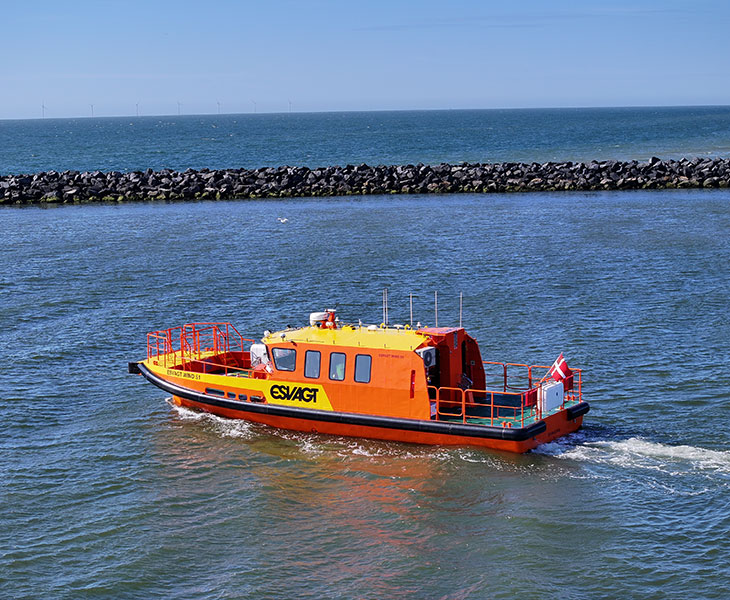
In March 2025, ESVAGT WIND 51, the second in a series of three STB15 (Safe Transfer Boats), departed from the port of Hvide Sande. Measuring 17,2 meters in length and constructed on a robust aluminium hull, the vessel is equipped with two Volta Penta D8 IPS 600 engines, delivering a top speed of 25 knots and a range of 200 nautical miles.
Specifications
Vessel type
Crew transfer Vessel
Vessel name
ESVAGT WIND 51
Delivery
First quarter 2025
Description
The STB (Safe transfer boat) will be launched from a lager mother ship
The North Sea’s harsh and unpredictable conditions place exceptional demands on safety, reliability, and operational flexibility. ESVAGT required a compact, high-performance boat capable of ensuring secure and efficient transfer of personnel and equipment.
In close collaboration with ESVAGT, Hvide Sande Shipyard developed three advanced Crew Transfer Vessels, ESVAGT WIND 50, 51, and 52. Each boat is engineered to function as a daughter craft within offshore wind farms, where durability and performance are non-negotiable.
Flexibility and performance
ESVAGT WIND 51 features a purpose-built hull design optimized for daily operation in challenging marine environments. Certified to transport up to fifteen technicians and two tons of cargo, the boat is fully equipped to support both routine assignments and emergency response tasks.
This project marked the second build of this boat type. From initial design to final delivery, we worked closely with ESVAGT to refine and optimise key elements, prioritising ease of use, serviceability, and long-term operational efficiency. The STB15 boats are built not only for performance but also for long lifetime.
A top-class product
“When ESVAGT approached us with the STB15 project, we saw it as an exciting opportunity to contribute to the development of a new type of boats with high complexity and high-quality requirements. It has been a strong partnership characterized by trust and a shared ambition to deliver a top-class product. We are proud to have contributed to a project where both relationships and results have gone hand in hand”
Jeppe Hoff, COO at Hvide Sande Shipyard
About the STB15 project
ESVAGT is a leading provider of safety and service solutions at sea, with a particular focus on the offshore wind sector. Together with ESVAGT, we identified and refined solutions to support the STB15 series through the production phase.
It consists of three identical Safe Transfer Boats designed for complex transfer tasks. These boats, including the ESVAGT WIND 50 and ESVAGT WIND 52, are designed to increase both safety and efficiency in ESVAGT’s maritime service operations.
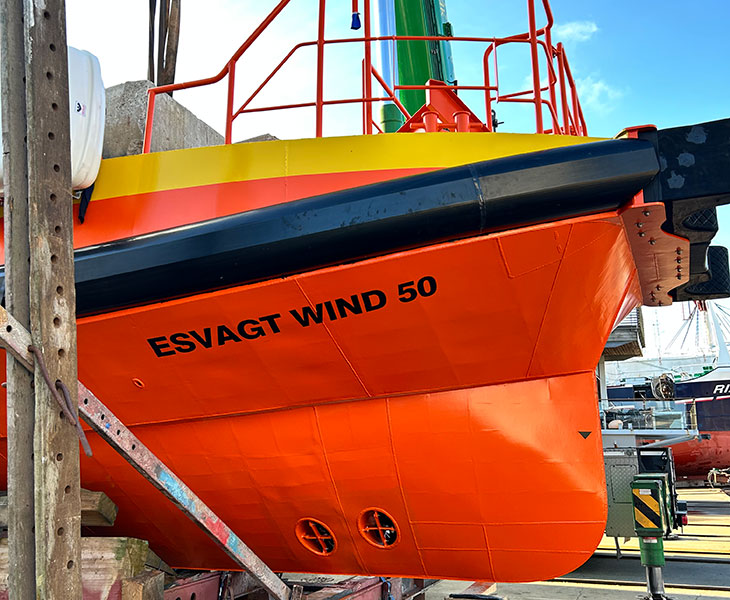
In February 2025, Hvide Sande Shipyard proudly delivered the first of three STB15 boats: the ESVAGT WIND 50. This delivery marked a key milestone in our continued collaboration with ESVAGT. The 17,2-meter boat is constructed of durable marine grade aluminum. This Safe Transfer Boat is powered by two Volta Penta D8 IPS 600 engines and can reach speeds of up to 25 knots. It is certified for an operational range of 200 nautical miles.
ESVAGT initiated this project when they required a new class of crew transfer vessels (CTVs) to function as daughter craft in offshore wind operations. ESVAGT searched for a partner with proven shipbuilding capabilities and the initiative to contribute to the design and optimization process. Hvide Sande Shipyard was selected because of our extensive experience in building advanced support vessels for the offshore sector and our dedication to providing customized, high-quality solutions.
Specifications
Vessel type
Crew transfer Vessel
Vessel name
ESVAGT WIND 50
Delivery
First quarter 2025
Description
The STB (Safe Transfer Boat) will be launched from a larger mothership
Operating in the harsh and unpredictable conditions of the North Sea demands uncompromising safety, performance, and operational flexibility. The ESVAGT WIND 50 was developed to meet these challenges and is capable of operating from either a mothership or directly from port.
From concept to delivery, our team collaborated closely with ESVAGT to refine the boats layout, structural integrity, and functional features. As the first of its kind, the ESVAGT WIND 50 exemplifies a forward-thinking approach to transferring crew and equipment under demanding offshore conditions.
“Our collaboration with Hvide Sande Shipyard has been characterized by innovation and focus on quality. Together, we have created a boat that makes an even stronger contribution to renewable energy production”
Søren Westphal, Senior Project Manager at ESVAGT
Built for offshore efficiency
Designed to meet rigorous maritime safety standards, the ESVAGT WIND 50 ensures safe and efficient transfer of technicians and equipment. Its reinforced hull and optimized layout support daily operations in rough seas. The boat can carry up to fifteen technicians and two tons of cargo, making it ideal for a variety of offshore service missions.
With the delivery of the ESVAGT WIND 50, followed by its sister boats, the ESVAGT WIND 51 and ESVAGT WIND 52, ESVAGT has enhanced its capabilities for safe and agile operations within the offshore wind segment.
About the STB15 Project
ESVAGT has long been a major player in maritime security and offshore wind services, known for its innovative approach and operational expertise.
Their latest project, the STB15 boats, is a further development of their previous STB12 models, of which we have delivered three previously. The NB 155 is the sixth Crew Transfer Vessel (CTV) we have built for ESVAGT.
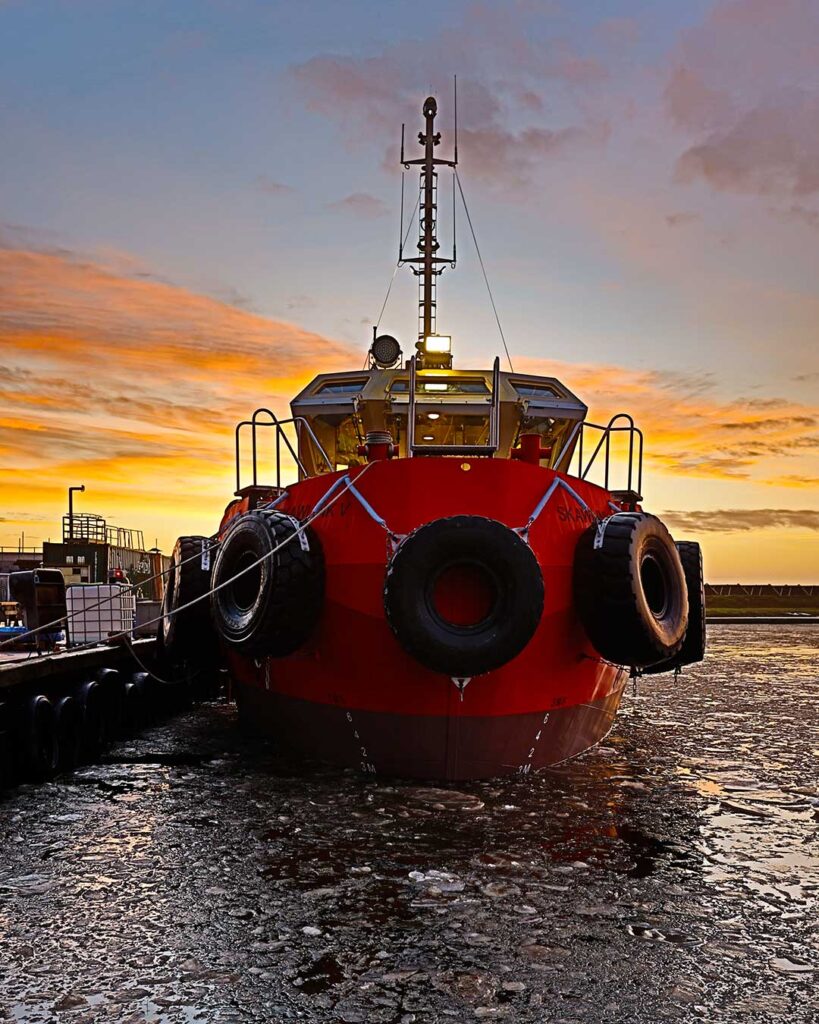
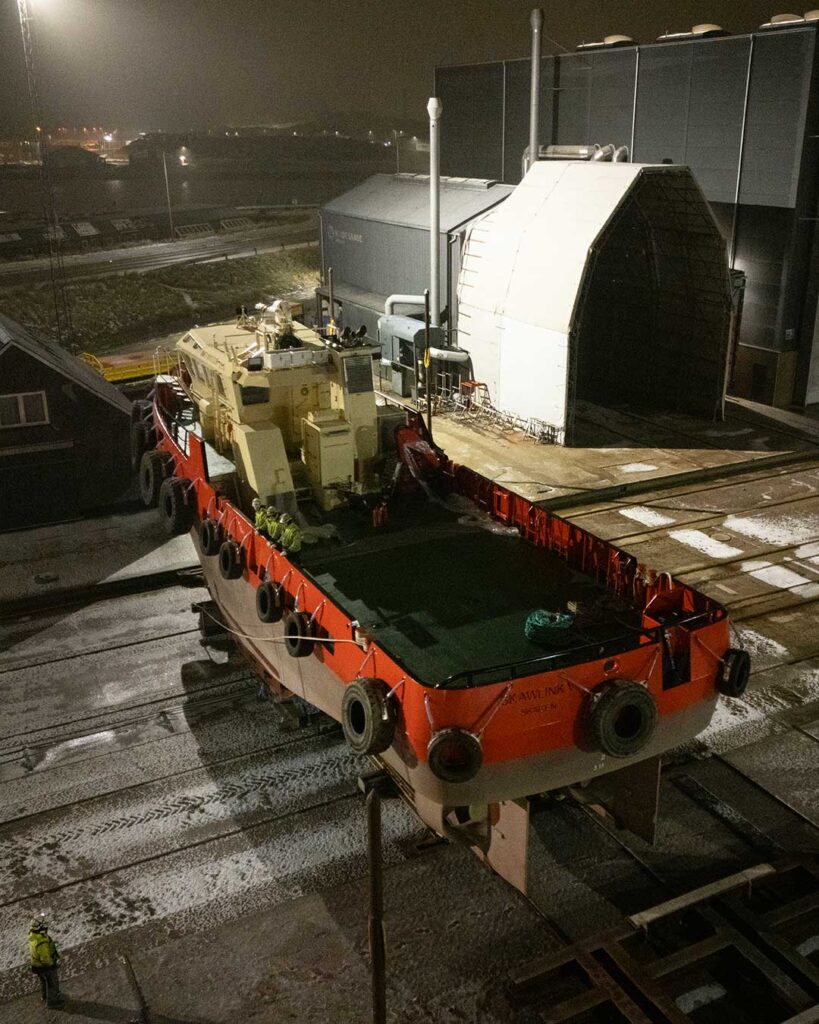
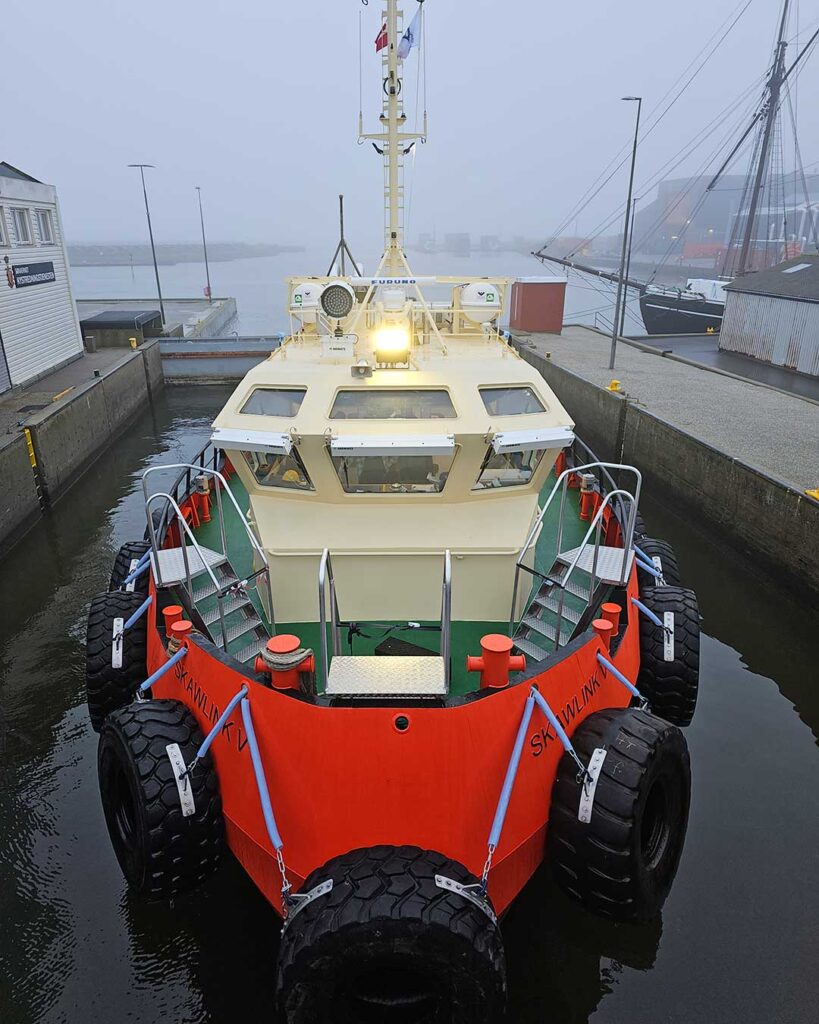
In December 2023, Hvide Sande Shipyard delivered the Skawlink V, a cutting-edge special purpose vessel, to the marine services provider Saga Shipping. This delivery marks the fourth newbuild from Hvide Sande Shipyard to Saga Shipping, highlighting a robust and enduring partnership.
Specifications
Vessel type
Special purpose vessel
Vessel name
Skawlink V
Delivery
December 2023
Description
Towing and supply vessel
Hull material
Steel
Tonnage
154 GT
Length over all
25,50 m.
Breadth beam
7,50 m.
Depth
4,08 m.
Passengers
12 passengers
Main engines
2 pcs. VOLVO D16MH, 551 kW/each
ESU (Batteries)
N/A
Aux. Engine
1 pcs Sisu GASR 6-07 128 kVA & 1 pcs SOLE Diesel 3-GTC 35 kVA
The Skawlink V has boosted Saga Shipping’s operational efficiency. Its advanced design and features enable the company to handle towing, supply, and anchor operations seamlessly, regardless of weather conditions.
With its impressive speed, cargo capacity, and reliability, the Skawlink V enables Saga Shipping to meet growing client demands and to service more clients faster.
“Once again, we have chosen to enter into a collaboration with Hvide Sande Shipyard, which has previously delivered 3 ships to our company. The initial inquiry involved a vessel where we attempted to combine speed and cargo capacity. However, we quickly agreed that the smartest approach was to build a sister ship to Skawlink IV, incorporating the improvements we have made since taking over Skawlink IV.
Discussions took place regarding the drawings, ship equipment, and how we intended to use the boat. Hvide Sande Shipyard has always had a good understanding of our business and operational needs.”
CEO Peter Møller, Saga Shipping
Strengthening the fleet to increase capacity and flexibility
Diverse and demanding needs of clients and an increased volume of operations called for a fleet expansion.
Saga Shipping required a new vessel that could handle a variety of tasks, from towing to supplying fresh water and lubrication oil, all while maintaining high safety standards and an operating profile of up to twenty hours a day. The Skawlink V was specifically designed to address the above challenges.
A modern multi-purpose vessel
Skawlink V was built as a slightly bigger but significantly optimized version of Skawlink IV, delivered in 2013.
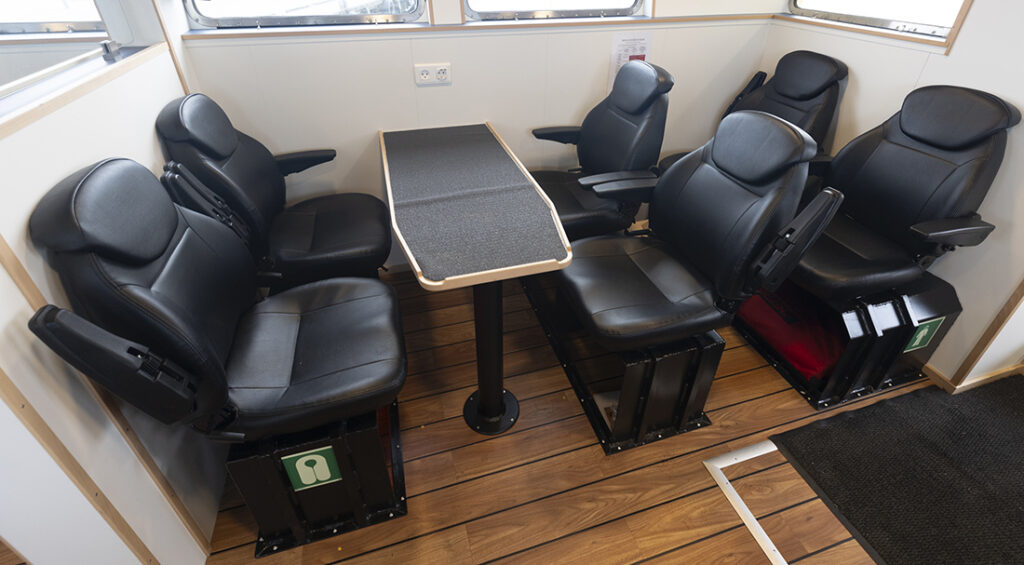
The new vessel is equipped with more technologically advanced systems, compliant with the latest regulations from DMA and Bureau Veritas, and offers greater power while at the same time being simple to operate and maintain. Furthermore, Skawlink V can operate under challenging weather conditions and can also be used for crew transfer of up to 12 passengers at a time.
Measuring 25.5 meters in length, 7.5 meters in breadth, and 4.08 meters in depth, the vessel is powered by two VOLVO D16MH engines, each producing 551 kW, enabling speeds of up to 12 knots.
Its propulsion system features two controllable pitch (CP) propellers, delivering a bollard pull of 20 tons. With a fresh water supply capacity of 128 m³ and a lubrication oil supply capacity of 22 m³, Saga Shipping can efficiently undertake extended missions and various marine operations.
The Skawlink V also features a spacious aft deck with a total area of 82 square meters, capable of transporting up to 55 tons of assorted payloads, including two 20-foot containers. This enhanced capacity and versatility are essential in meeting the operational demands of Saga Shipping’s clients.
Fourth newbuild for Saga Shipping
The delivery of the Skawlink V underscores the commitment of Hvide Sande Shipyard to innovation and quality in shipbuilding.
This newbuild not only strengthens Saga Shipping’s fleet but also highlights the successful longstanding collaboration between the two companies.
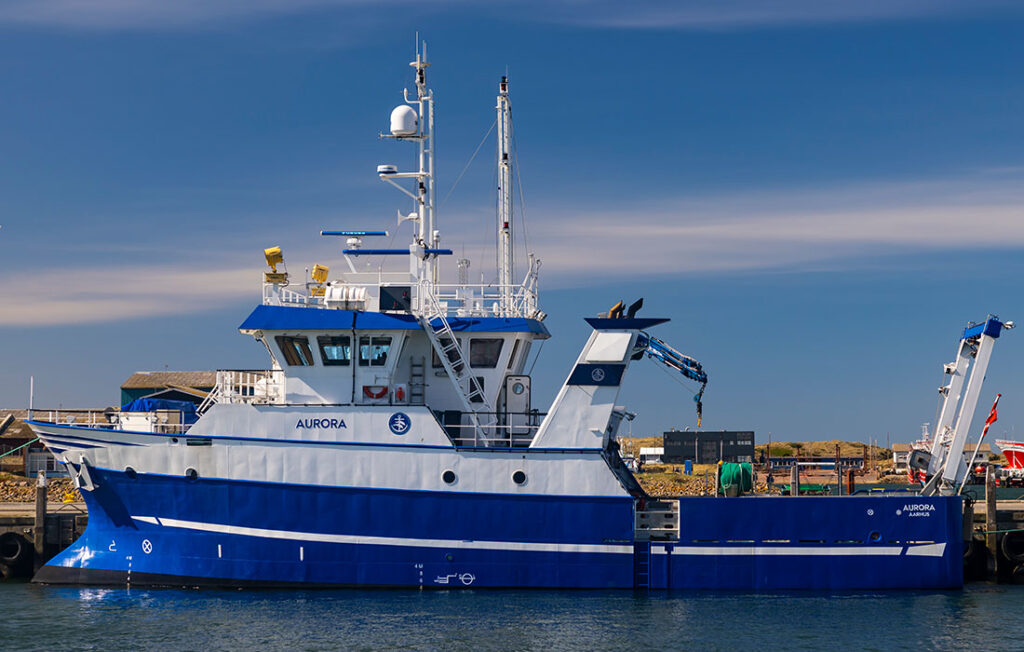
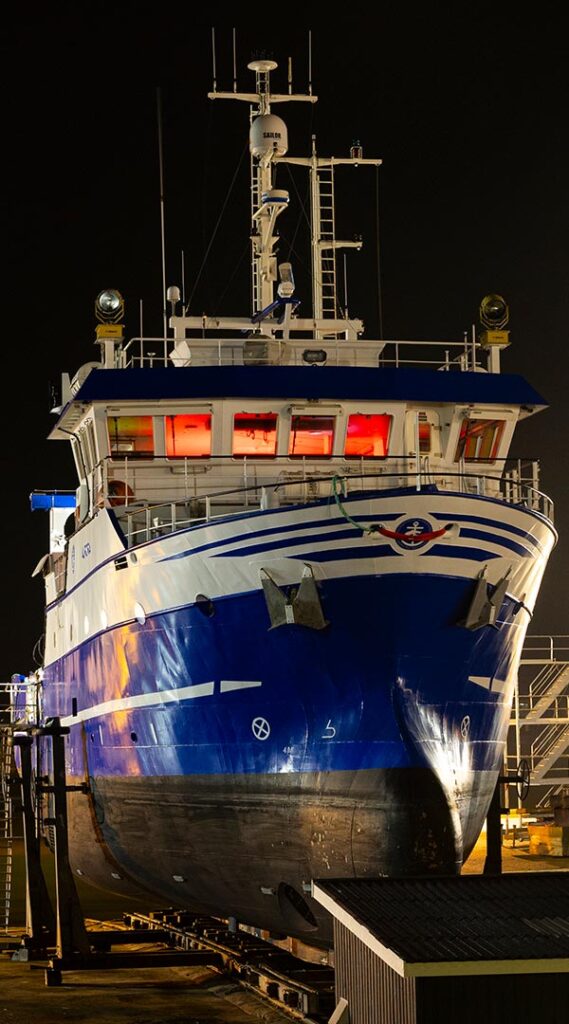
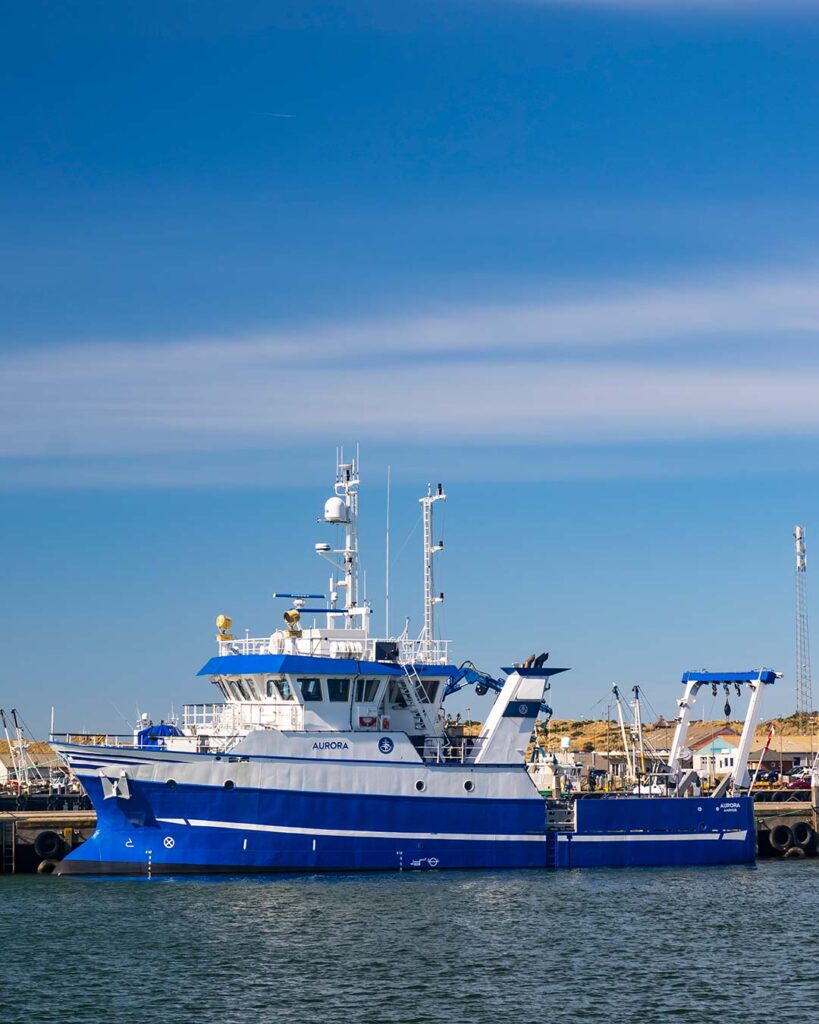
In March 2014, Hvide Sande Shipyard delivered the top modern research vessel Aurora to Aarhus University. This marked the beginning of a new era in marine research for the university, providing a state-of-the-art platform for a wide range of scientific explorations.
Specifications
Vessel type
Special purpose vessel
Vessel name
Aurora
Delivery
March 2014
Description
Research vessel to Aarhus university
Hull material
Steel
Tonnage
310 GT
Length over all
28,00 meter
Breadth beam
8,50 meter
Depth
4,34 meter
Passengers
12 passengers / Crew
Main engines
2 pcs. Scania DI13 H71M, 368kW/each
ESU (Batteries)
N/A
Aux. Engine
1×74 kW + 1×384 kW
Speed(knots)
11 knots
Propulsion
2 pcs. VP 8
Classification
DMA / hull GL
Other equipment
Available
Reliable multi-purpose research vessel
Aurora has proven to be a multi-purpose and reliable research vessel. Its advanced design and robust construction have enabled it to support various research activities, from marine biology to oceanography. The vessel’s versatility ensures that it meets the diverse needs of the scientific community, making it an important asset for Aarhus University.
Diversity in research tasks
One of the significant challenges Aarhus University faced was the diversity in research tasks. The vessel needed to accommodate different types of scientific equipment and methodologies, which required a highly adaptable design.
This challenge was met with innovative solutions that allowed Aurora and her crew to handle a broad spectrum of research activities efficiently.
Flexible layout with room for both equipment and research teams
Aurora’s flexible layout, with space for both equipment and research teams, was key to overcoming the challenge of broad range of research tasks.
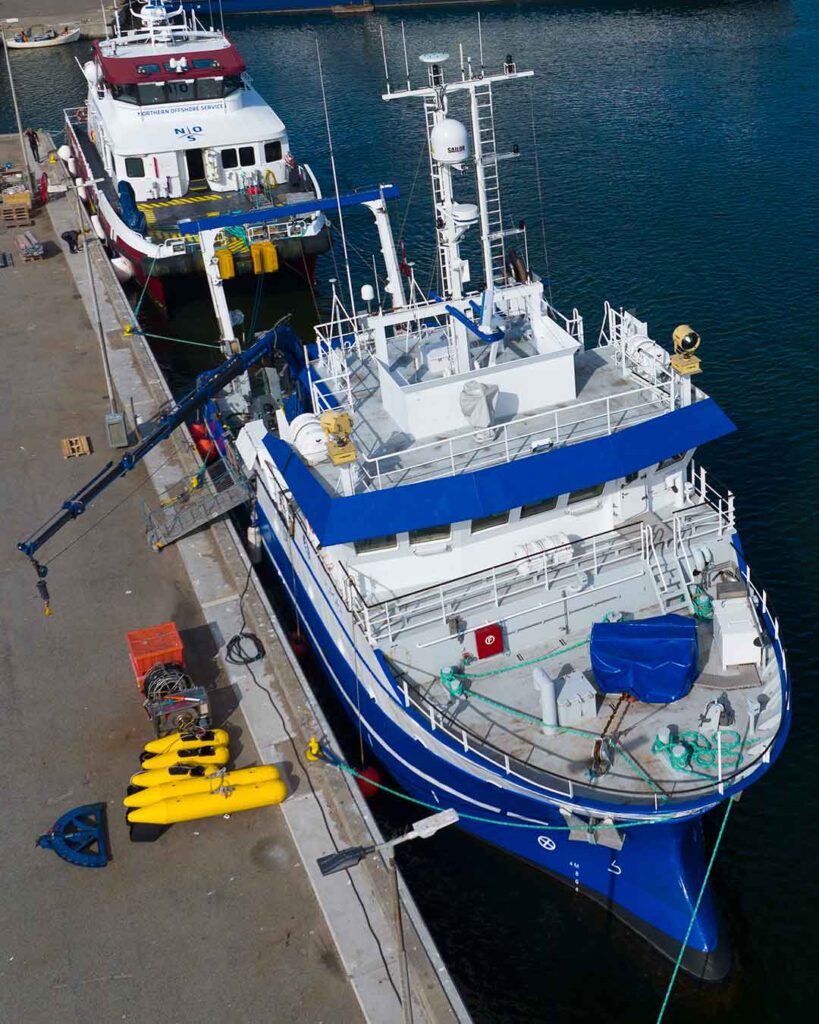
Aurora features a large working deck and gantry for deploying and recovering trawl and heavy equipment over the stern. It is classified to operate in the Baltic and North Sea, with an endurance of up to 10 days at sea.
The aft working deck can accommodate two 20′ containers for technical equipment, such as a seismic air gun array or a specialized laboratory, in addition to the onboard lab. Alternatively, a trawl winch can be mounted. The gantry facilitates the deployment and recovery of trawl and heavy equipment like pistoncore samplers. A sheltered deck with starboard-side doors allows for the deployment and recovery of water samplers and CTDs.
Aurora is powered by two propellers, each driven by a 368 kW Scania DI13 diesel engine, and includes a 150 kW bow thruster for dynamic positioning. The vessel’s top speed is 11 knots.
The ship has three decks:
Main deck: Contains the galley, stores, combined mess, lounge, meeting room, dry lab, and a sheltered wet lab extending to the open aft deck.
Below main deck: Houses the engine room and cabins for the crew (2 single rooms for the captain and chief mate, 2 double rooms for deck crew and cook) and scientific crew and students (2 double rooms and 1 four-bunk room).
Bridge deck: Includes the bridge, ship electronics, and a lower section for computers and equipment used during data collection from multibeam sonar, seismic streamers, and other towed equipment. A platform on top of the bridge is designed for visual surveys of birds and marine mammals.
A wide range of marine research activities
The research vessel Aurora, operated by Aarhus University, is a state-of-the-art, multifunctional ship designed to support a wide range of marine research activities.
Launched in 2014, Aurora is equipped with advanced technology, including a multibeam echosounder and a sub-bottom profiler, which allow scientists to conduct detailed studies of the seabed and sub-seafloor structures.
The vessel’s large working deck and specialized laboratories enable the deployment of various scientific instruments and the collection of diverse marine samples.
Aurora plays a role in environmental monitoring, studying marine ecosystems, and investigating geological formations. It also supports research on climate change impacts and marine biodiversity, making it an invaluable asset for advancing our understanding of the marine environment.
This vessel is designed for transportation of max. 42 pasengers between Kalvehave and the state Veterinary Instutute for Virus Research, on Lindholm. And from time to time the vessel is used as a tugboat